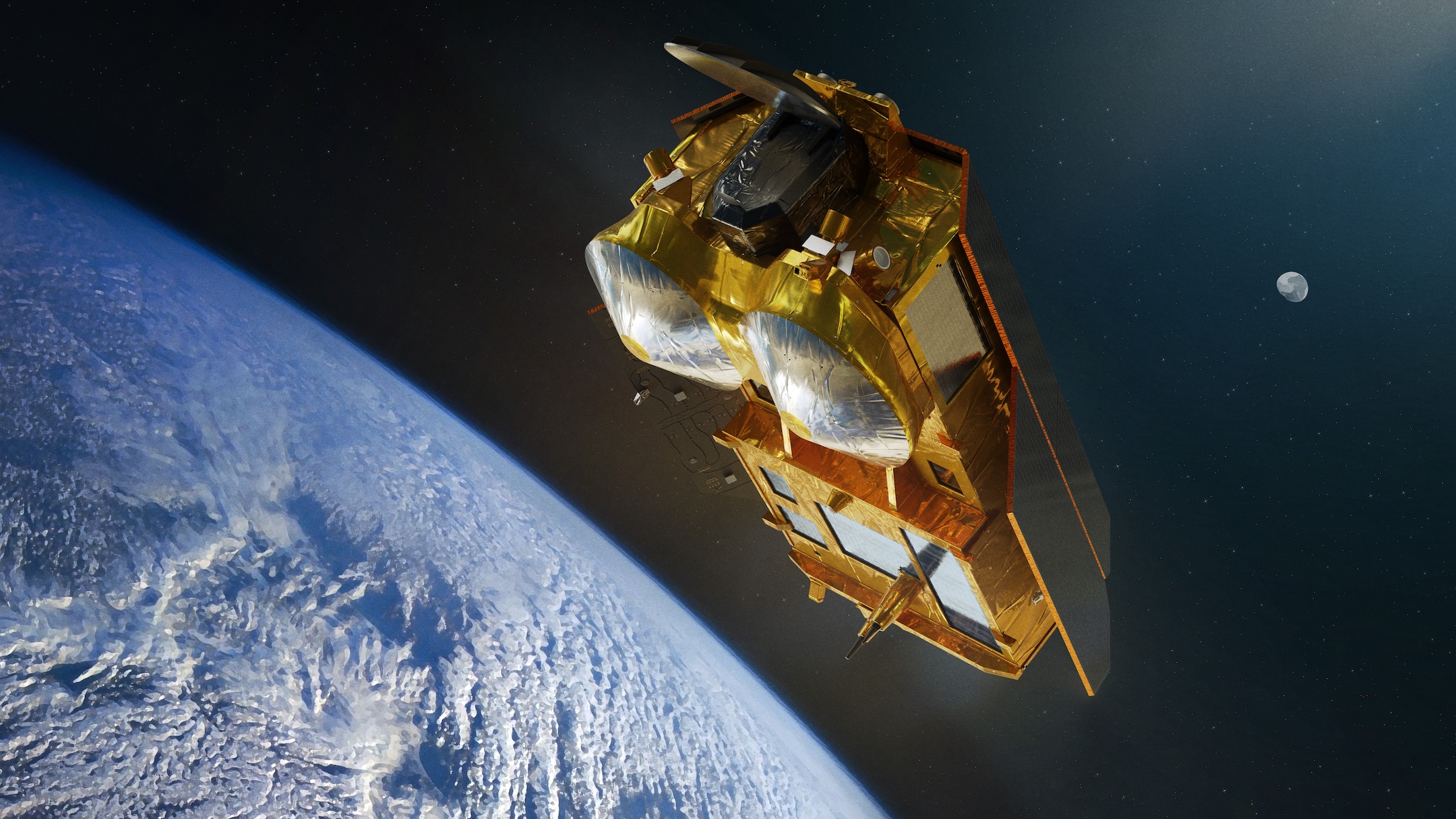
Europe’s next-generation ice-monitoring satellite has completed a key deployment test as it advances toward launch. Engineers at Airbus facilities in Friedrichshafen, Germany, tested the solar arrays of the Copernicus Polar Ice and Snow Topography Altimeter (CRISTAL) spacecraft after completing assembly in September, according to an Oct. 26 update from the European Space Agency (ESA). The solar-panel test checked whether the mechanisms and software would deploy the spacecraft’s wings as intended in orbit. Engineers also verified its fit with the launch adapter and tested the release mechanism that will separate CRISTAL from its rocket. ESA said the satellite will next undergo environmental testing at the agency’s facilities in the Netherlands. CRISTAL is designed to measure sea-ice thickness, the depth of snow above sea ice, and changes in ice-sheet elevation. Its instruments include a dual-frequency radar altimeter and microwave radiometer, allowing researchers to track the polar environment while maintaining long-term ice-elevation records established by earlier missions, including CryoSat. ESA now targets launch in late 2027 to early 2028. Image Credit: Airbus
Top Stories
Europe’s CRISTAL Ice Satellite Opens Wings Ahead of Testing